



What are piles?
Haemorrhoids, commonly known as piles, are normal blood vessel cushions located in the anus and lower rectum. These cushions help maintain continence by ensuring control during bowel movements.
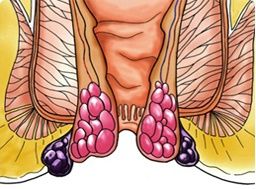
They usually go unnoticed unless they become swollen or diseased, leading to symptoms such as:
- Bleeding
- Pain
- Itching
- Prolapse (protrusion)
- Mucus discharge
What causes piles?
Piles become symptomatic when the supporting tissues weaken and the vessels enlarge.
Common causes include:
- Chronic constipation
- Straining during bowel movements
- Low-fibre diet
- Pregnancy
Over time, the supporting tissues stretch and tear, causing the piles to enlarge, protrude, and bleed. Symptomatic piles are common in Singapore, affecting about one-third of the population.
Classification of piles
Piles are classified into four degrees based on severity:
1st degree: Internal piles that do not protrude. May cause bleeding.
2nd degree: Protrude during bowel movement. Retract spontaneously.
3rd degree: Protrude and remain outside. Can be pushed back manually.
4th degree: Permanently prolapsed. Cannot be pushed back.
Treatment of piles
Non-surgical treatment (1st and 2nd degree)
Early-stage piles can usually be managed without surgery:
- Increase intake of fibre (vegetables, fruits, whole grains)
- Drink adequate fluids
- Avoid straining during bowel movements
Medications may be prescribed to relieve symptoms.
Rubber band ligation
- A simple clinic procedure
- No anaesthesia required
- Minimal discomfort
- Effective for early-stage piles
When to see a doctor
You should seek medical advice if you experience symptoms such as bleeding.
These symptoms may also be caused by more serious conditions like colorectal cancer, which is one of the most common cancers in Singapore.
Your doctor may recommend a colonoscopy to examine the large intestine before confirming the diagnosis.
Surgical treatment
Surgery is considered for 3rd and 4th degree piles, or when conservative treatment fails. These are typically performed as day procedures under anaesthesia.
1. Conventional haemorrhoidectomy
- Removal of piles using electrocautery
- Healing time: 4–6 weeks
- Post-operative pain and minor bleeding are common
2. Stapled haemorrhoidectomy (PPH / Longo procedure)
- Uses a circular stapling device
- Faster healing (around 2 weeks)
- Generally less painful
Possible complications after surgery
- Pain during bowel movements (may lead to constipation)
- Mild bleeding
- Rare wound infection
- Small risk of recurrence
Patients are usually prescribed: Pain relief medication, mild laxatives Advice to maintain good hydration
Prevention
Preventing piles focuses on healthy bowel habits:
- Eat a high-fibre diet
- Drink plenty of water
- Avoid prolonged straining during bowel movements
Summary
Piles are a common and treatable condition. Early-stage disease can often be managed with lifestyle changes, while more advanced cases may require procedural or surgical treatment. Any rectal bleeding should always be evaluated to exclude more serious conditions.